


Heating jacket ball valves
Efficient heating for demanding media
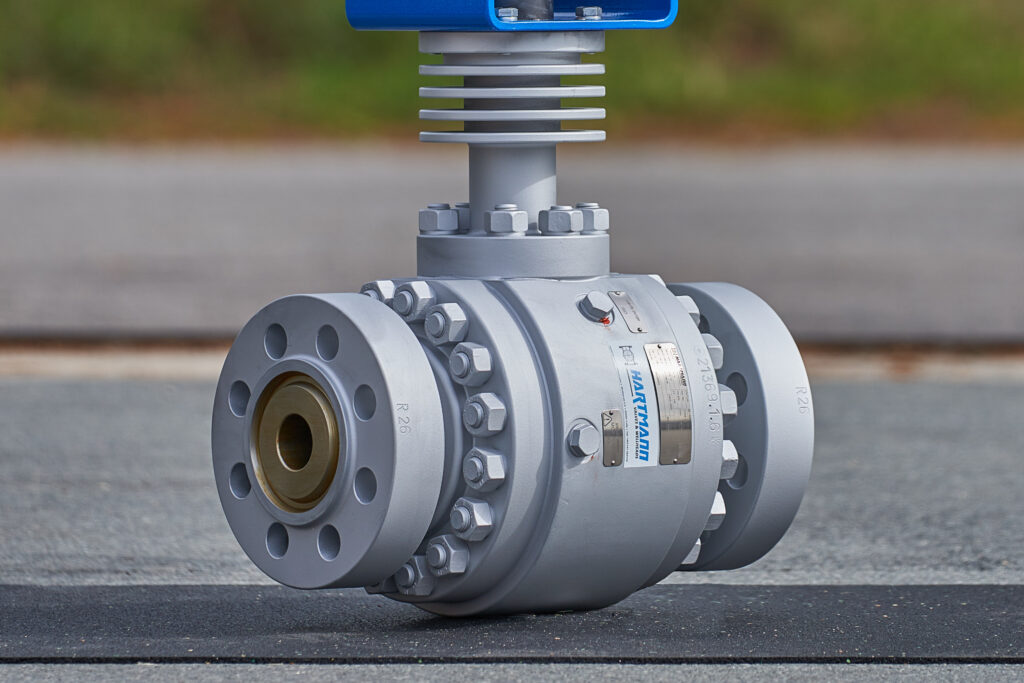
Heating jacket ball valves from Hartmann Valves are used wherever media must be heated to remain flowable and to prevent process disruptions. The innovative design with an integrated heating jacket enables optimized heat transfer while maintaining a compact design.
Compared with conventional solutions with a welded-on double jacket, the integrated concept reduces the distance between the heating medium and the process medium, ensuring more efficient heat transfer, higher operational reliability and a longer service life.





For Safe Operation
Technical highlights & safety features
Heating jacket ball valves from Hartmann Valves are used wherever media must be heated to remain flowable and to prevent process disruptions. The innovative design with a fully integrated heating jacket replaces conventional welded-on double-jacket solutions and offers decisive advantages in terms of efficiency, safety and installation.
The short distance between the heating medium and the process medium achieves significantly improved heat transfer. This results in consistently low viscosity, reduces energy demand and relieves pump systems. At the same time, heating prevents media from solidifying and protects valves and pipelines from damage caused by solid formation.
The metal-to-metal sealing system also ensures high operational reliability—even with media containing solids, such as sulfur cement in a CLAUS unit.
- Split body
- Solid design; exclusive use of rolled and forged steel, no castings
- Floating ball design
- Spring-loaded seat elements on both sides
- Metal-to-metal sealing (gas-tight)
- DIN/ISO interface for mounting actuators/accessories
- Maxi heating (intensive heating integrated in the ball valve, for both the moving parts and the flanges)
- Standard heating jacket connections: 2 x NPT female thread
- With standard flanges or “oversized” flanges
On request, we can also manufacture with the following design modifications:
- Larger nominal diameters (DN)
- Higher pressure ratings (PN)
- Higher operating temperatures (up to 450°C)
- Custom heating jacket connections
- Custom face-to-face lengths
- Compact design with block flanges
- Midi heating (heating of the moving parts integrated in the ball valve)
- Partially welded body
- Brass as an internal component for particularly good heat transfer between the heating medium and the process medium
- Heating jacket pressure optionally up to the PN rating of the valve
Customer-Specific Design
Custom-Made for Your Processes
Hartmann heating jacket ball valves are designed for demanding applications and ensure reliable operation even with viscous or solidifying media.
The solid bodies made of rolled and forged steel ensure high strength and long service life. The metal-to-metal sealing system ensures permanently safe shut-off, even with solids content. At the same time, the integrated heating jacket ensures consistent temperature control and reduced viscosity, relieving pumps and protecting systems.
Temperature
−10°C to +300°C (optional up to +450°C)
Pressure
up to PN 420 / Class 2500
Media
Liquid sulfur, wax, bitumen, polymers, resins, refinery residues
Applications
CLAUS units, polymer processing, refinery processes, plants with viscous or solidifying media
You are currently viewing a placeholder content from YouTube. To access the actual content, click the button below. Please note that doing so will share data with third-party providers.
More InformationReliable Shut-off
Our Metal-to-Metal Sealing System
Metal-to-metal sealing ball valves are designed for applications where soft-seated systems reach their limits. They are used wherever demanding media, extreme pressures and temperatures, or high cycle operations require a permanently reliable shut-off. The gas-tight sealing system meets leak rate A and ensures a permanently reliable shut-off.
The tightness of our valves is verified through technical testing in accordance with the relevant regulations and the applicable product standard. Our internal manufacturer standard exceeds the requirements of common testing standards such as API 598 and DIN EN 12266. In this way, we create a resilient basis for very high shut-off tightness in demanding applications. The internal definition of leak rate A is based on ISO 5208.
The metal-to-metal sealing between the ball and seat rings ensures high wear resistance, minimized maintenance requirements and a long service life.
Reference
BALL VALVE WITH
INNOVATIVE
HEATING JACKET DESIGN
Claus process: Heated shut-off ball valves for liquid sulfur. Thanks to the special design with
excellent heat transfer between the heating medium and the process medium,
the sulfur remains in the hot liquid phase. Thanks to the high-quality carbide coating, the function and tightness of the valve can be ensured even with solids content such as sulfur cement.
- Design with an integrated heating jacket
- Heat transfer is significantly improved
- Low emissions in accordance with TA Luft
Certified safety for heating jacket ball valves
Our high-performance valves comply with national and international standards, including:
- TA-Luft 2021 (Emission Control)
- ISO 15848 (for fugitive emissions)
- ATEX (for potentially explosive atmospheres)
- PED 2014/68/EU




Contact us
Do you need support with the design of heated valves? Our team will advise you individually—quickly and easily.
FAQ
Why is an integrated heating jacket more efficient than a double jacket?
By integrating it into the body, the distance between the heating medium and the process medium is reduced. This improves heat transfer, lowers energy demand and increases operational reliability.
Which media are suitable for heating jacket ball valves?
Typical media are viscous or solidifying substances such as liquid sulfur, wax, bitumen, polymers or refinery residues. Heating prevents solidification and ensures a stable process.
Which temperatures are possible?
Up to +300°C as standard, optionally up to +450°C—depending on the application and design.
Which materials are used?
Hartmann uses solid bodies made of rolled and forged steel for maximum stability and operational reliability.
What is the difference between Maxi and Midi heating?
Maxi heating fully heats the body, ball and flanges, while Midi heating specifically heats the moving parts—ideal for different process requirements.