


Twin Ball Valve
Double safety in a compact design
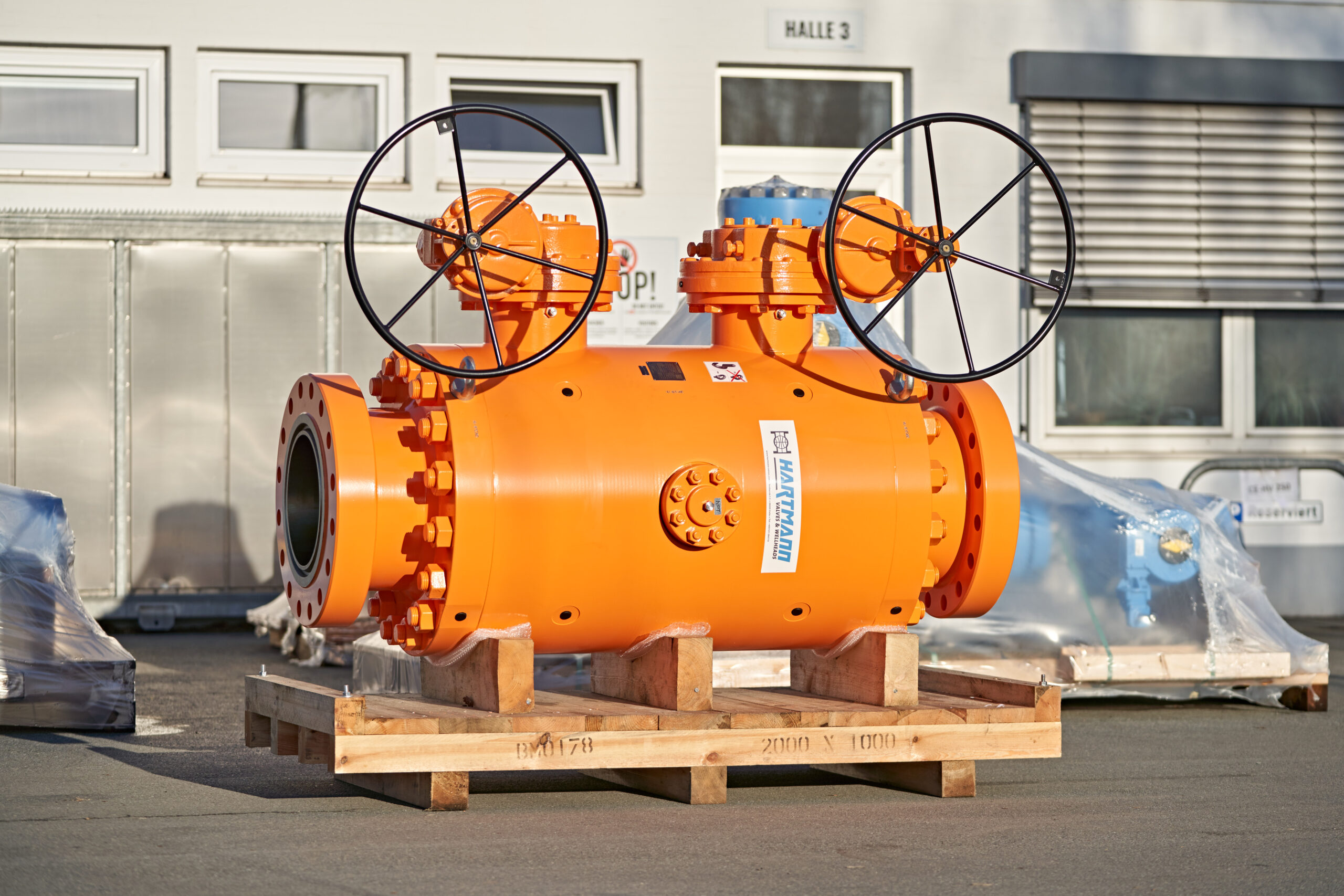
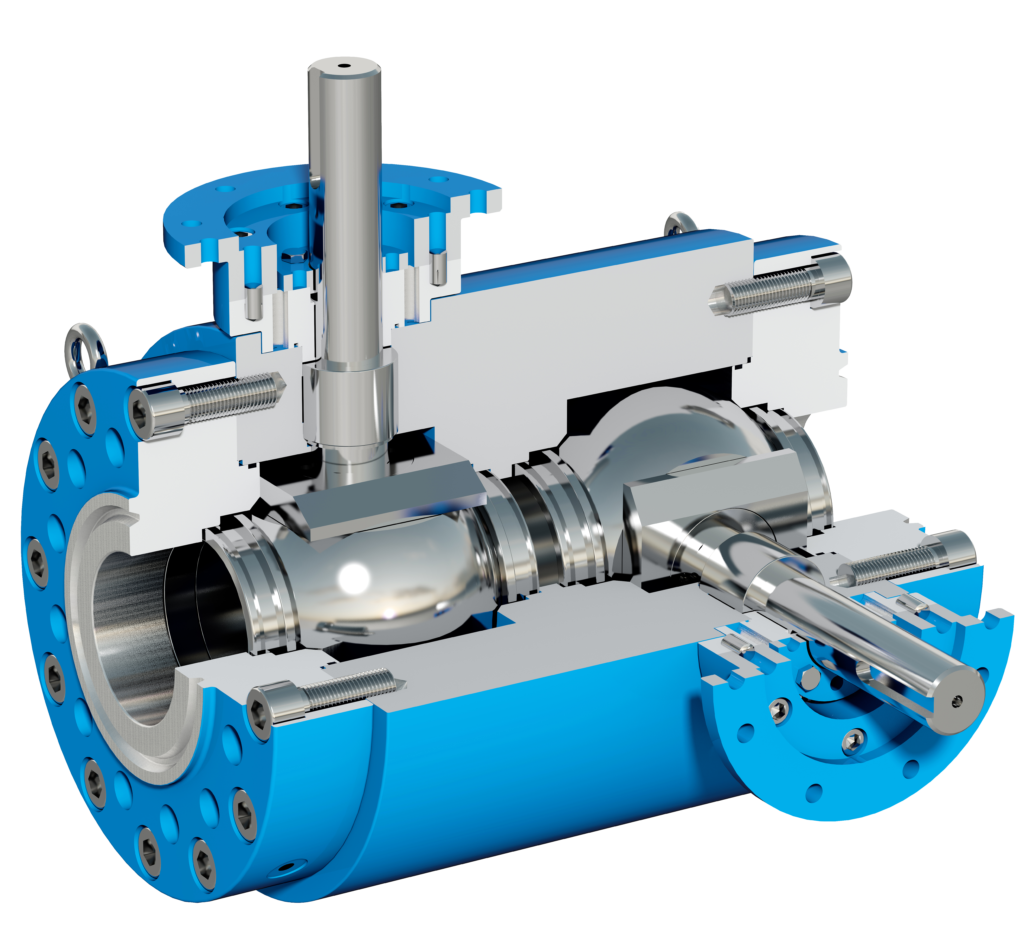
Hartmann Valves Twin Ball Valves are used wherever the highest safety requirements call for double isolation. Two independent shut-off systems in a compact body provide a 0-bubble leak rate allow testing between the systems, and at the same time reduce space requirements and material use.
The result is a highly integrated valve solution for safety-critical applications that offers maximum reliability while maintaining a compact design.



For Safe Operation
Technical highlights & safety features
The Twin Ball Valve combines two fully featured ball valves in one body, enabling a compact implementation of Double Block and Bleed (DBB) and Double Isolation and Bleed (DIB) concepts.
The metal-to-metal sealing systems ensure a zero-bubble leak rate, while the design allows testing between the two shut-off systems. Thanks to the compact design, space is saved compared to two individual valves and the number of potential leak points is reduced.
Versions with Double Piston Effect (DIB) as well as various actuation and control concepts are available as options.
- Metal-to-metal sealing systems
- Zero-bubble leak rate
- Three-piece bodies (split body) or forged block design
- Depending on nominal size, with trunnion-mounted ball or floating ball designs
- Blowout-proof stems
- Floating, self-centering seat rings with preloaded spring elements
- Automatic body pressure relief (for trunnion-mounted balls)
- Line-pressure-dependent sealing force
- Double Block and Bleed (for trunnion-mounted balls)
- Replaceability of the upper stem seals at full line pressure
- No electrostatic charge build-up
- Fire safe to DIN EN ISO 10497 / API 607
- Maintenance free
On request, we can also manufacture with the following design modifications:
- with Double Piston Effect (DIB)
- made from special materials for extreme applications
- soft-seated
- with or without drain and vent connections (option for trunnion-mounted balls)
- with metal-to-metal sealing drain ball valves (see option)
- with reduced bore
- with special internal or external coatings
- with electric, pneumatic or electro-hydraulic actuators
- as a custom design for your specific application
PED 2014/68/EU and API 6D:
- DN 25 – DN 500 (1″ – 20″) up to PN 420 (ANSI 2500)
Further nominal sizes and pressure ratings on request!
API 6A:
- 1 13/16“ – 7 1/16“ up to API 10,000
- 9“ – 11“ x 10“ up to API 5,000
- 13 5/8“ – 16 3/4″ up to API 3,000
- PSL 1 – PSL 3G
- Temp. Class K – Y
Further nominal sizes and pressure ratings on request!
Pressure range
- up to PN 420
Customized design
Individually manufactured for your processes
Twin Ball Valves are designed for applications where maximum tightness, operational reliability, and long service life are critical.
The combination of two completely independent shut-off systems in one body increases safety many times over compared to conventional solutions. At the same time, the metal-to-metal sealing design ensures minimal wear, high temperature resistance, and permanently stable tightness.
The valves are designed to be maintenance free and provide reliable shut-off even with high cycle operations and extreme operating conditions.
Temperature
-46°C to +250°C
Pressure
from vacuum up to 420 bar
Nominal Sizes
DN 25 - DN 500 (1" - 20")
Media
Natural gas, raw gas, process gases, hydrocarbons, aggressive chemicals (e.g., acids, alkalis), high-pressure liquids, as well as media with residual pressure or critical pressure/temperature conditions
Applications
Oil and gas production (onshore/offshore), chemical and petrochemical plants, high-pressure and long-distance pipelines, storage and injection systems (gas, H₂, CO₂), safety-critical shut-off (DBB/DIB), refineries and process plants with increased safety requirements
You are currently viewing a placeholder content from YouTube. To access the actual content, click the button below. Please note that doing so will share data with third-party providers.
More InformationReliable shut-off
Our metal-to-metal sealing system
Metal-to-metal sealing ball valves are designed for applications where soft-seated systems reach their limits. They are used wherever demanding media, extreme pressures and temperatures, or very high actuation frequencies require permanently reliable shut-off. The gas-tight sealing system meets leak rate A and ensures permanently reliable shut-off.
The tightness of our valves is verified through technical testing in accordance with the relevant regulations and the applicable product standard. Our internal standard exceeds the requirements of common test standards such as API 598 and DIN 12266. This provides a robust basis for very high shut-off tightness in demanding applications. The internal definition of leak rate A is based on DIN ISO 5208.
The metal-to-metal sealing between the ball and seat rings ensures high wear resistance, reduced maintenance requirements and a long service life.
Certified safety
Our high-performance valves comply with national and international standards, including:
- PED 2014/68/EU
- API 6D / API 6A
- DIN EN ISO 10497 / API 607 (Fire Safe)




Contact us
We support you throughout all project phases: from planning and design to manufacturing, installation and regular inspection.
FAQ
What is a Twin Ball Valve?
A Twin Ball Valve is a ball valve with two independent shut-off systems in one body. This design enables double line isolation while maintaining a compact form factor.
When is a Twin Ball Valve used?
Whenever the highest safety requirements apply—for example in the oil and gas industry, chemical plants, or high-pressure applications with aggressive media.
What are the advantages of the metal-seated design?
Metal sealing systems are particularly low-wear, temperature-resistant, and durable. They ensure permanently stable tightness even under extreme conditions.
Which safety functions are possible?
Twin Ball Valves can be designed as DBB or DIB systems and also allow testing between the shut-off units.
Can Twin Ball Valves be designed to customer specifications?
Yes, all valves are adapted to the specific project requirements, for example with regard to materials, actuators, coatings, or pressure and temperature requirements.